Music, Musings

Songwriting Project…and how YOU can make it happen!

For the past couple years, some of my friends/brothers/sisters have been collaborating on some songs and have formed the Gallery Church Collective: a songwriters group in, of, and for the church.

Some of you may know, but we now have enough material to be able to record our first EP, entitled “Identity” and have created a gofundme page to raise support for the recording, mastering, and release.

We would love for you to consider supporting us, and there are multiple levels of giving which trigger fun rewards (and even a chance to be on the recording yourself!).

The link is here

See the video below…
.

Standard
Musings, Scripture, Sermon Notes

(Post) Sermon Notes: Scripture

After some urging by a few people, I will be doing my best to post some notes and perhaps some additional thoughts from my teachings from the weekends. (not to mention make use of this incredibly underused blog o’ mine)

I would always welcome further engagement and discussion here, being that my desire in teaching is hardly to end a conversation but, rather to spur it onward. So feel free to read this, and perhaps listen to our podcast as well to get the most content.

I probably had the most fun reading/preparing for this past weekend’s sermon than I have had in awhile, simply because the Christian Scriptures fascinate me to no end.

Here are some of my notes from this weekend:

-Right belief about the Bible (as bound up in words like inerrancy, authority, inspired, etc.) is important but insufficient when it comes to how we use/understand/apply it. In the same way as claiming a map is the authorized map is insufficient in meaning you will get to your destination or that it is the most efficient or safe route (I borrow this analogy from Christian Smith [see recommended reading])
-If we want to model our church life after the early church, we must devote ourselves to the Apostle’s Teaching (as they did) amongst other things.
-To devote ourselves to something is a continual, intense, and ever-increasing “holding onto” and “wrapping around”.

This raises two questions:
-What is the Apostle’s Teaching?
-How do we devote ourselves to it?

The Apostle’s Teaching
This is not a shorthand for “the Scriptures” but rather a way of understanding and interpreting the Scriptures.
Teaching here is not a verb, it is a noun. They did not devote themselves to going to see the Apostles every day or weekend. They devoted themselves to their teaching; the substance of their message. So what was the substance of their teaching?
The previous part of the chapter to tells us in Acts 2:15-41

The Apostle’s Teaching is (at least)…
Jesus’ Life and Ministry (v. 22)
Jesus was a real man with a real life and a real ministry! And this is important! It is not just about his death and resurrection, it is about his life! This means all that is in the Gospels.
Jesus’ Deliberate and Undeserved Death (v. 23)
Jesus’ Triumphal Resurrection (v. 24, 32)
Jesus’ Receiving and Pouring out of the Spirit on All people (17-18, 33)
-Young and old, men and women
-Peter is explaining to the people their place in salvation history and is interpreting to them the events of what is taking place.
Respond to it in repentance! (v. 38-39)

Devoting Ourselves to the Apostle’s Teaching

So when we talk about valuing the Scriptures, the way in which we value them is by devoting ourselves to the Apostle’s teaching, which was Christ’s life, death, and resurrection and the outpouring of the Spirit for the continued work of Christ in the world. So this is more than just believing that the Scriptures are true and having tons of Bible studies. This is about HOW we read, study, meditate, listen, and digest. We do it by continually pursuing the story of Jesus, seeking to find him where we look, and then asking “What do I do with this?”

Jesus is the interpretive key. We devote ourselves to the apostle’s teaching by trying to see Jesus as they did: the fulfillment of the long awaited hope of Israel and the future hope for the world.

A few supporting quotes:

“For a Christian, every part of the Bible must in some way point to Christ, to the living person of Jesus who is the Christ, and to the unlimited, liberating love of God which is revealed in Christ. To put it bluntly, it is not the words of the Bible that are ‘the way, the truth, and the life.’ It is the person of Christ, to whom the Bible witnesses.” (Keith Ward, What the Bible Really Teaches: A Challenge for Fundamentalists (London: SPCK, 2004), 27.)

Dietrich Bonhoeffer says it this way: “In its entirety and in all its parts it is nothing but this witness of Christ, his life, his death, and his resurrection.” (No Rusty Swords, ed. Edwin H Robertson, trans, Edwin H. Robertson and John Bowden (1965; repr., London: Fontana, 1970), 312.)

John, an apostle, explains why he even wrote his Gospel and included what he did in John 20:31, “But these are written that you may believe that Jesus is the Messiah, the Son of God, and that by believing you may have life in his name.”

So we devote ourselves to a teaching; a way of understanding the Scriptures, which is ultimately about Jesus. So we devote ourselves to the story, as fulfilled in Jesus.
Not to merely a book (or rather a collection of books).
Not to a theological system or “ism”.
Not to a certain pastor, leader, or author.
Not to a social cause.
Not to a philosophy.
To the ancient, apostolic teaching that Jesus is the full revelation of God himself, he has redeemed the world, and he invites us to join him.

What does this stir in you? Questions? Thoughts?


Recommended Reading:
The Bible Made Impossible by Christian Smith
The Blue Parakeet by Scot McKnight
Surprised by Scripture by N.T. Wright
How to Read the Bible for All It’s Worth by Gordon Fee
Coffee House Theology by Ed Cyzewski (his chapters on Scripture and Tradition are very thoughtful)
For those of you who struggle with the OT (like me), particularly the violence,this is an excellent article by Brian Zahnd.

Standard
Baltimore, Musings, Neighborhood, Rooted, Suffering

Thoughts from the Justice for Joe Rally

I was honored to be a part of such a stirring support of Mr. Joe tonight. Mr. Joe (Yogesh Sheth), was shot and killed during an attempted robbery at his Mini Market Deli & Grocery store, a mere two blocks from our front door. He worked in Highlandtown for 25 years. He was killed May 1, 2015. The police have given no new information since the first 24 hours of the incident.

His family invited me to share a few words, and here is (mostly) what I said.

Good evening, friends and neighbors.

I want to begin by thanking Ms. Meena Saywack and Teresa from Matthew’s Pizza who invited me to come and share some thoughts with you today.

I know some of you here, but I realize many of you may not know me. My name is Derek Miller and my wife, Kara and I are newer to Highlandtown, having only been here a few years. But we live a mere two blocks from this place, I serve as a neighborhood pastor at Gallery Church Patterson Park and serve on the board of our Highlandtown Community Association.

But today, I am merely a neighbor amongst my other neighbors. In spite of what has happened here and the many challenges we face as neighborhood, Highlandtown has become my home; a place that I love and believe in. I can’t claim to speak for all of us, nor would I even attempt to today. But I will share what I have seen, what I see now, and what I hope for for our community and for Mr. Joe’s family.

Like many of you, I remember where I was and what I was doing when I heard the news of what happened here to Mr. Joe. I was working with other neighbors, still cleaning up and recovering from the aftermath of the looting which took place mere blocks from here. I saw the police helicopter swooping over us and someone received word that there was a shooting on Highland Ave. I immediately ran up to see what had happened, and came across Mr. Harry and Miriam, in the midst of a flurry of police activity and crime tape. I couldn’t process what had happened. So many were in shock. The grief settled in for many of us waves. I still remember how numb I felt in trying to explain to others what had happened, as the concerned crowd grew. We talked and cried and prayed together. I didn’t know what else to do. To this day, I still don’t know what else to do but talk and cry and pray.

In the days that have passed, we have all grieved in our own ways. We have experienced anger, fear, confusion, indignation, and intense pain. This is normal but it is painful, there is no doubt about that.

What keeps me moving forward are showings like that of today. We, in spite of our differences, all have a deep desire for justice to prevail in our neighborhood. We want Highlandtown to be a place where businesses can operate without fear of senseless violence. We want a better story for those who come here from other places to seek their own welfare and the welfare of their community.

So I grieve today, but I have great hope. It is my own belief that God is capable of bringing amazing beauty and life out of the most despicable and ugly situations. That is my prayer and hope for Mr. Joe’s family and friends. It is also my hope for Highlandtown; not only for justice but for peace and prosperity, knowing that they are all linked together. I invite you to continue to work for the welfare of our neighborhood, and to continue to stand in solidarity with those who, like Mr. Joe’s family, have experienced such great loss. There is beauty and hope to be found there, as we share our pain and hope with each other.

We do want justice for Mr. Joe and we continue to implore the police and government officials to exhaust any and every opportunity and resource to bring those who committed this senseless crime to justice. I encourage all of you to sign the ongoing petition, if you haven’t done so already, which urges our police dept and all our representatives to do their jobs and not forget about what we remember every day we walk by this store. In the meantime, I commit myself to being more connected to our local businesses and neighbors. I regret that I did not take enough time to know Mr. Joe as well as so many of you knew him.

I wonder what we could accomplish if we all were able to support one another like this in the future. I wonder what our neighborhood could look like if we all lent the same support as we are showing today in both good times and bad. I commit to doing my best to support you as a long-committed neighbor.

Thank you all for being here, and may there be justice for Joe…

Please consider signing this petition, which will be handed directly to the Police Commissioner.

Standard
church, Matthew, Musings, Scripture, Sunday

Thoughts from Last Sunday’s Text

This Sunday was the first time in awhile I didn’t really give a sermon. We had an open mic time of sharing about the events of this past week in Baltimore, how we are processing, what we need to pray for, etc. It was a beautiful time and I was very proud of our church family.

We then read Matthew 10:16-23 and I gave 5 thoughts which came up as I read them. I wanted to just share them, without much commentary.

When Jesus sends us out, we are promised authority and presence, not safety. (v. 16a, 17-18)
We have a responsibility to be wise and to act with integrity. We need to act in peace, but act strategically. (v. 16b-17a)
We cannot avoid conflict as we seek to proclaim and embody the kingdom of God. (this is hard for me) (v. 21-22)
The only way we will be successful in our mission is if we go empowered by the Spirit. (v. 19-20)
Our work is never done, until Jesus returns (v. 23)

Any thoughts?

Standard
Jesus, Musings, parable

A Retelling of a True Fictional Story

pray-2.gif

This is a retelling of one of Jesus’ parables from Luke 18 that I told in conjunction with our focus on the “Judge not” passage in his Sermon on the Mount in Matthew 7. My desire was to try and capture the intensity of the story as Jesus would have told it and to find ourselves as those who really need to hear and learn from it. We are most certainly those “who were confident of their own righteousness and looked down on everyone else” (Luke 18:9)
I shared it this past Sunday. Would welcome any thoughts. I call it a true, fictional story because that is what parables are.

On one particular Sunday morning, at one particular inner-city church, a faithful church member showed up early, as he did every Sunday (for almost 30 years of Sundays), to pray faithfully and earnestly for his church and community. He sat in his normal seat, (which was in the back row, of course) and it seemed to have, over-time, almost formed to his frame. As he continued to pray, he would kneel, the carpet worn and threadbare in the same spot as a result of his faithful and frequent intercession.
Moments later, a local city councilman walked quietly and sheepishly through the main doors of the sanctuary, hoping to not be noticed by a single soul. He was searching for a quiet place, and in many ways he wasn’t even sure why he left his luxury, rehabbed townhouse in the first place. After all, this was not just a councilman. This was the city councilman, or rather that city councilman. Ever since the news broke of scandal and his recent indictment on charges of multiple counts of fraud and bribery, he had just been buying his time. He was out on bail and awaiting his trial, a trial in which he knew a guilty verdict was inevitable; he was going away for a long time. In deciding to go out for an early morning walk, he, somewhat absentmindedly, happened upon this church. He was going to continue on, but something within him compelled to step inside. So, he risked it and, finding the door unlocked, he stepped inside.
As he did, he saw the older gentleman praying in the back row to his left. The councilman tried to ignore the combined looks of recognition and the angry glare which came over the old man’s face, as he continued to mutter his whispered prayers under his breath. Sensing the anger of the older man, the councilman quickly looked away and took the furthest possible spot, on the other side of the sanctuary, in the front pew.
The old church member felt a fire in his gut as he continued to pray, reflecting on what he knew this councilman had done. He began to pray with thanksgiving: thankful that God’s justice had won out over this man’s evil. Thanksgiving for those whose money would be returned as reparations were made. He thanked God for the fact that this old man had never stolen a dime in his whole life. He thanked God that he had never lied under oath, gotten caught up in politics, or made promises he couldn’t keep. He lifted his head from his prayers, glared over at the councilman and said, perhaps even out loud, “Lord, thank you so much that I am not like this corrupt, thieving, no-good politician! He steals from the poor, and has removed people from their neighborhoods, but I serve at the shelter twice a week!”
Meanwhile, the councilman was doubled over, shaking ever so slightly. He held his face in his hands, and quietly wept. He folded his hands so tightly, his knuckles turned white and he couldn’t stop shaking. The only words he could force out were between sobs were, “God, if you really are there, can you ever forgive me for all the wrong I’ve done?” “Will you forgive me?” was all else he could say…
The councilman left, even before the worship service began, and as he did, he left right with God. Though the consequences of his actions still lay ahead, he had the peace of God’s forgiveness. The church member, however, who stayed at church until he shook the very last hand, left thinking that he was right with God, mostly because he had seen someone else who wasn’t, and was glad to not be them. But he was not right with God, merely convinced in his mind that he was right, and many others were quite wrong.

Standard
Musings

Holy Places and Different Faces

I had an incredibly holy experience this past Tuesday evening that really caught me off-guard (as such experiences often do).

In order to enrich and inform my calling as a pastor in my neighborhood, I have begun to take classes at a local, ecumenical seminary. They have been incredibly life-giving to me and I have learned so much already in my short time there.

This past Tuesday was no exception as I sat in a room with a few others to learn about and discuss christian ministry and faith formation. We could not be more different from each other in faith tradition, background, culture, and calling. Yet in sharing our stories of “calls” to ministry, something profoundly sacred happened in our midst: we became more known and we saw ourselves in each other.

As we each recounted our stories, we discovered two characteristics in common: we were created for a purpose that burned within us and we have struggled deeply with it. As we all had the realization that we were united in these ways, the room seemed quieter yet more alive at the same time. We could see and appreciate God’s hand of mercy on all of us. We could sense his enduring grace and loving patience in each person in the room. It was magnificent.

And for the first time in a long time, my view of the Church and her God was widened significantly. As much as we were different, in that moment, we were very much the same. As much as we could disagree on this and that, we dare not argue the validity of each one’s call.

We were all loved. We were all aware of our weaknesses. And we were all in awe of the God who wanted to use us for his kingdom in this world.

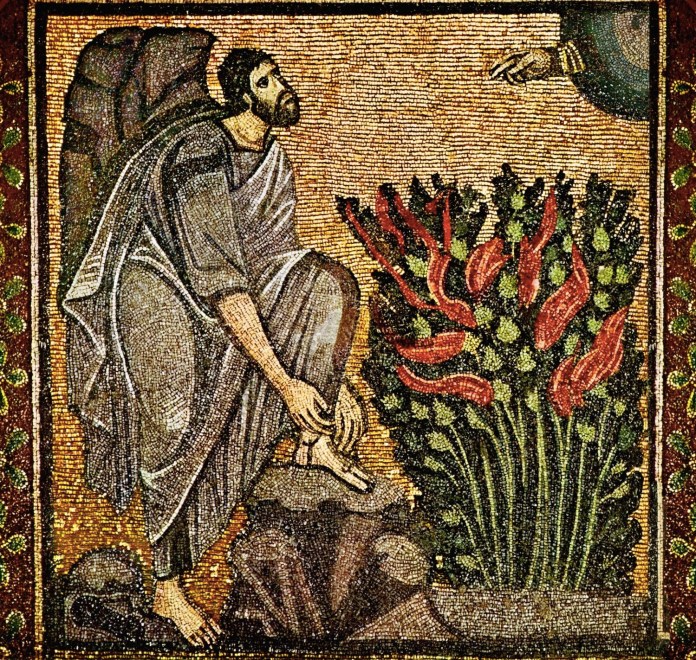
In hindsight, I should have removed my shoes because it was an encounter not unlike Moses and the burning bush: where God’s call meets human weakness, brokenness, and struggle and He overcomes it with a call to go and an assurance of his presence.
Holy ground, indeed.

Standard
Life, Musings, Neighborhood, Rooted

Putting Down Roots

It has been far too long since I have taken the time to write here, but I feel like I am headed back into a season of writing. Usually this happens for two reasons: 1) I have a lot to process and 2) the weather will soon be getting cooler. There is something about writing in the fall and winter that I just love.

Anyway, one of the largest developments in Kara and I’s life has been moving into our new place as first-time home buyers! We have now planted ourselves more firmly in the Highlandtown neighborhood after renting here for about two years. This is the physical evidence of a lot of struggle, prayer, joy, and trust. As with most big life changes, there is often much going on beneath the surface.

We have both become convinced that being fully invested in a focused area is the way we can come to see things be renewed and restored. And by renewed, we don’t mean the other negative baggage that can come along with that word (gentrified, suburbanized, etc.). We just really want to see all relationships restored: those with each other, with the land, and with God. And we know we must be a part of that.

Secondly, our church family has found a more permanent home in the former Patterson Park Baptist Church building on Eastern Avenue. To make a long and wonderful story very short, the 100-year old church voted to give their buildings to us to continue on the legacy of kingdom work in our neighborhood. While buildings are not necessary for the church to be the church, it does communicate something very real: we are really and truly here. And there is something to be said for that (actually a lot of things to be said, in a later post).

These are two of the huge developments that cause us to see that we are being called to put down roots here in the nighborhood and just seek the wellness of those around us. I think Jesus wants us to take the “love thy neighbor” thing seriously and literally. So, here we are.

What do you think about where you live? Do you feel rooted, uprooted, awkward, scared…? I would love to know your thoughts, so feel free to comment below.

Standard
Musings

Don’t Use Your Imagination (like that)

As I belong to part of the generation that was raised by Mr. Rogers, I have been taught the importance of using my imagination. I was shown that is it can take me to a wonderful realm of small trains and creepy hand puppets. And for some reason, I always remember the episode that showed me how crayons were made.

Recently, the concept of imagination is something that has intrigued me again. Perhaps it is because it is not as socially acceptable at this age to use it, or talk about using it. We are all encouraged from an early age to use our imaginations. It is talked about it a good way. It is good, healthy, and right to use your imagination (even if it means you have an imaginary friend named Frank).

But could the use of your imagination ever be bad? Could it ever be really unhealthy?

W. P. Young in his book, The Shack, uses a conversation between Jesus and the main character to say something incredibly profound about imagination:

“Exactly,” Jesus interrupted, “You imagine. Such a powerful ability, the imagination! That power alone makes you so like us. But without wisdom, imagination is a cruel task master.” (emphasis mine)

Without wisdom, imagination is a cruel taskmaster.

Think about it this way: how much time do we spend thinking about the future? Many of us can plan out what we imagine will happen to us. We can trace different trajectories, see different outcomes. And for many of us, this develops stress and anxiety and worry. For others, it can be truly paralyzing, keeping us from engaging in the world around us because we are so afraid.

But in our imaginings, where is God? Do we imagine that He will provide for us like He has already? Do we try to think of creative ways in which He may work in us and around us and through us? Do we really think he knows better than we do?

If we are honest, we don’t include God in our imagination; because it is our imagination. It is our way to say we trust God when we really trust ourselves. It is our way of nominally confessing our dependence on him while leaning on our own understandings. Because, if we’re honest (and I am being honest here about myself) we think we know best and we are scared of what could come our way, especially if it means being out of control.

Proverbs 26:12-13 says it this way:
“Do you see a person wise in their own eyes?
There is more hope for a fool than for them.
A sluggard says, “There’s a lion in the road,
a fierce lion roaming the streets!””

Really? A lion roaming the streets? That is quite an imagination! But we do this all the time.

Now, imagine if we took that creative impulse and channeled it with these truths in mind:

Now to him who is able to do immeasurably more than all we ask or imagine, according to his power that is at work within us, to him be glory in the church and in Christ Jesus throughout all generations, for ever and ever! Amen. (Eph 3:21-22)

Trust in the Lord with all your heart
and lean not on your own understanding;
in all your ways submit to him,
and he will make your paths straight. (Proverbs 3:5-6)

So, yes. “Grow ideas in the garden of your mind.” But don’t worry about pests, crop production, weather patterns, or whether they are growing fast enough. Trust that if you plant them, God will grow them exactly how they need to grow. Those are all things you could never control, not even in your wildest imagination…

Standard
Baltimore, church, Holy Spirit, worship

When We Gather: Prayer

If I am to follow Jesus, then the simple fact of the matter is I must seek to pray like Jesus prayed. And this is no small thing. Perhaps I am alone on this, but it seems that the conversation on prayer too rarely goes back to the model that Jesus set (with the exclusion of the “Lord’s Prayer”). I love how Jesus offered that example when asked how one should pray. But I am also intrigued as to how Jesus modeled prayer throughout his life

He was a good Jew. He most likely went through the daily prayers like the others during his time. We, as a Gallery family, have started doing something called “Daily Windows” (taken from Daniel 6) where we enter into this pattern of stopping to recognize God’s presence to be reminded of our dependence on Him. And I know through my conversations with others, that this has been incredible for us. I am excited for this coming week as we step into more times to pray and fast together as a family.

However, Jesus prayed outside of those times as well. He would spend much time in solitude to pray. He begged his followers to pray with him before he was to be crucified. He prayed before choosing his disciples. He sent up random prayers of gratefulness to the Father. He talked to God as a son to his father; with respect and intimacy.

To put it in one hyphenated word, Jesus life was prayer-soaked. And mine isn’t. And if you were to be honest, yours probably isn’t either. It is one of the areas that we can never get to the point of complete satisfaction. I don’t think I can ever say with complete honesty that I pray enough because my prayer life is directly proportionate to how much I think I have to depend on God.

Raymond Brown puts it this way, “To be prayerless is to be guilty of the worst form of practical atheism. We are saying that we believe in God but we can do without him. It makes us careless about our former sins and heedless of our immediate needs.”

I would add to this by saying even if we are content in the state of our prayer life (and not seeking to grow in it), we may be guilty of the same form of atheism.

I want to pray for the things that Jesus prayed about. And I want to be serious about those same things. I have struggled lately with getting caught up in some secondary issues in Scripture as I have been studying the past few weeks (hence the gap since my last post). Not that these things are bad, but I have been convicted of the fact that I am not concerning myself with one of the big things that Jesus prayed for: unity. This is another topic for another day/post, but consider the following things and ask, “When is the last time I prayed for this?” It has been revealing for me.
-protection for all believers
-unity for all believers (likened to the unity between Jesus and the Father)
-believers having the full measure of joy
-sanctify them in the truth
-that the world may believe in Jesus because of our unity
-that the world will see our love and, thus, see God’s love
-Your will be done
-daily bread for everyone
-forgive all our sins
-the power to forgive others in the same way

The list could go on. How do you pray? How should we pray? Is this a struggle for you?

Standard
church, worship

When We Gather: The Scriptures

Scripture
Some of you may have been waiting for this one to come around. Don’t worry, I’m not leaving it out. I mean, if I didn’t include it, I would be considered some sort of heretic or something. However, I will not go down the all-too-predictable road of throwing out words like “inerrancy”, “authoritative”, or “verbal-plenary inspiration” (that last one was just for kicks!). I am coming from a somewhat conservative viewpoint on the Scriptures, the details of which can be discussed later if you would like.
Instead, what I would like to discuss is the place of the Scriptures in corporate worship and the church at large. That is, its use. Perhaps we can begin with how we should not use the Scriptures (again, me being aware of the dangers of creating an opinion based on the negative side of an issue…I am open to being challenged here as always!).

We should not use the Scriptures…

As a trump card- Ever heard of the term “proof-texting”? This is what happens when someone (I’ve been guilty!) takes a passage or verse out of its context to support his or her own beliefs. Anyone could do this to justify a thousand different behaviors. So, instead of this, we will consult the Bible as a whole and try to let it be what it is.

As a sword to wield (hold on hear me out!)- Ok, yes…the Word is called a sword. I know. But, consider this thought: If it is sharper than any double-edged sword, do we really need to stab people with all of our might? Our motivation is to love always. When the Sword cuts people (notice, the Word does the cutting, not us!) we should grieve along with them in the pain and be prepared to apply the healing balm of mercy and grace.
I had a conversation with a former classmate once and as we were talking about the use of Scripture in sharing our faith, he insisted that we use the Bible to “poke holes” in the arguments of others and then “sweep in” with the truth of the Bible. While I understand that his statement was made with a heart that desires to see people come to trust Jesus, does it not sound combative? May I suggest that the “holes” that he was referring to need not be poked but merely exposed. A doctor does not show his patient that he needs care by exacerbating his symptoms. He gives proofs. He shows x-rays. He runs diagnostics. The Bible is not some sort of spiritual drill and wood putty combo. It is a tool used by the Holy Spirit to grip us at our deepest level. Consider the famous passage with maybe a fresh perspective: “For the word of God is living and active. Sharper than any double-edged sword, it penetrates even to dividing soul and spirit, joints and marrow; it judges the thoughts and attitudes of the heart.” Hebrews 4:12 (emphasis mine)

As an instruction manual- Bible=Basic Instructions Before Leaving Earth. Anyone heard this before? Again, I understand the heart behind such a statement, but, to me, it is more indicative of this weird Christian culture desire to be cute rather than accurate. If it is truly an instruction manual, it is quite possibly the most poorly written one in the world (although there are some handy maps at the back if you are interested in knowing how to be a missionary and get shipwrecked and thrown in prison.) However, there is a mindset that states that if the Bible is not explicit in any given area, such a thing is not permissible. Much of the New Testament is descriptive and not prescriptive. While there is value in the descriptions, they are not necessarily binding in how we should conduct ourselves, nor are they complete. While this must be navigated carefully, we are seeking to be a community of faith influenced by these great stories, submissive to the commands of Jesus, but not restricted by what is not mentioned. (more on this later)

As an inspired translation- Oh my, the translation battle. We, at the Gallery, use the NIV. It’s a decent translation. I personally try to use as many translations as possible when I study the Scriptures. It is important to remember that a translation is just that…a translation (although, you could also argue that a translation is also an interpretation). We are grateful that the Scriptures have been preserved and we can hear them in our language. No translation is inspired or more holy. We are more concerned with trying to live out the ideas presented and not in the minutia. Please, no comments about translations or arguing about which one is best (assuming anyone is reading this).
So how will we use the Bible? The same way many others have before us. We will read it together. We will sing it together. We will examine it together. We will question it together. We will study it together. We will seek to obey it together. We will let it read us rather than just the other way around. (there is a theme, here!)
We will always understand that the Bible has borrowed authority. God is the one with the authority.

These words may be challenging to your thoughts of Scripture. They have been for me. What do you think? I would love your feedback, friends.

Standard